


Sound Medicine

Sound Medicine is sound advice

Sound Medicine

Colorful cells flowing under a microscope

The intent to achieve good cell vibes is possible with good vibes.

A school of fish moving together at the water's surface

Time to evolve.

A serene woman with eyes closed in soft light

Time to define your own medicine — where you are the working component.

An independent thesis therapy study

The medicine where you are the working component in your therapy.

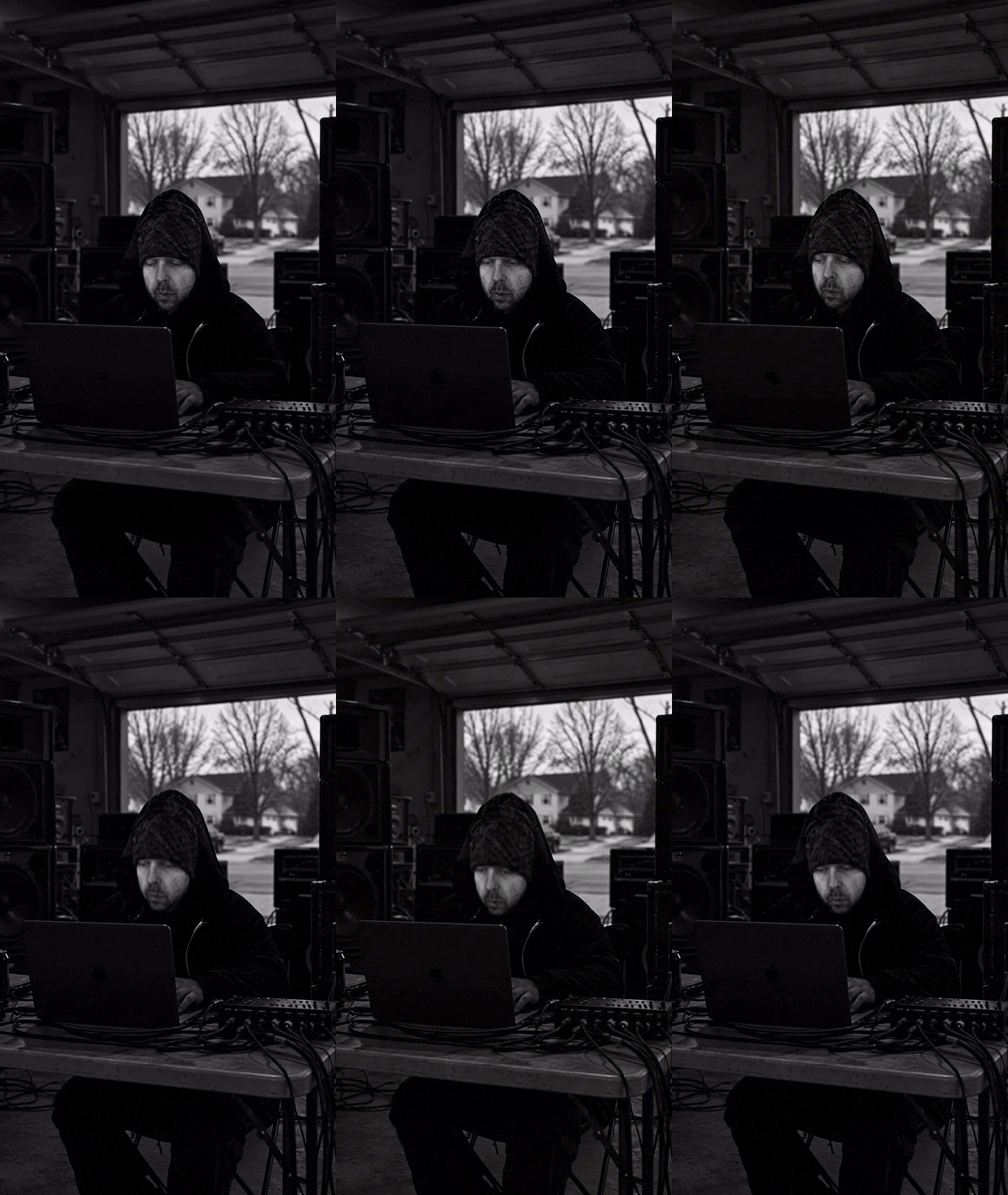
Independent researcher working at a laptop in an open garageSound Medicine

The researcher

From an open garage on a quiet street, one independent researcher set out to prove that sound — composed, chosen and practiced by the listener — can be medicine.

A different kind of medicine company.

Sound Medicine began not in a laboratory but in a garage: a laptop, a pair of headphones, a notebook and a question. What if the most powerful component of a therapy wasn't a molecule in a bottle, but the patient's own breath, voice, attention and intention — guided by carefully designed sound?

Thomas Rosario Wysocki's thesis study explores frequency healing tones and sound design as daily practices of wellness. Participants receive sound therapy through headphones, earbuds and speakers in the places they actually live — bedrooms, porches, living rooms — and record their experiences in wellness journals.

The result is a body of applications, each one a different doorway into the same idea: when you participate, you heal. Every tone is an invitation. Every session is a dose you give yourself.

Sound Medicine applications are wellness and creative tools. They are not intended to diagnose, treat, cure or prevent any disease and do not replace professional medical care.

6
Sound medicine applications
7.83 Hz
Earth's Schumann resonance
528 Hz
The most requested tone
1
Working component: you

In Beats By Pharma app you can literally write your own script, I want to feel like im in rainbows and the app functions in giving you a sound design related to it, thus your medicine is your dreams coming to life, now that is the future of medicine!

Stories

People at the center of their healing.

Mara found her quiet in a single tone.

Patient story · Resilience

Mara found her quiet in a single tone.

Through months of treatment, Mara's evenings became the hardest hours. Wrapped in her mother's scarf by the window, she began twenty-minute sessions of 528 Hz layered beneath soft rain through her earbuds. "The room stopped feeling empty," she says. "The sound held me when nothing else could."

Her journal now tracks breath, sleep and mood alongside each session — a record of a body learning to rest again. Some nights she writes only a single word; other nights, pages. Looking back across the weeks, she sees the pattern clearly: on the evenings she listened, she slept longer and woke kinder to herself. "I stopped waiting to feel better," she says. "I started practicing it."

Afternoons on the porch, tuned to 432 Hz.

Patient story · Anxiety

Afternoons on the porch, tuned to 432 Hz.

Simone describes her anxiety as "a hum I couldn't turn off." Her answer was to meet it with another hum. Each afternoon on her porch steps, with her cat Pearl beside her, a small speaker plays a slow generative composition tuned to 432 Hz, and she hums along.

Over twelve weeks, her self-reported calm scores rose steadily. She noticed her shoulders dropping before the first minute was over, and her breathing lengthening to match the music. The porch became a place she looked forward to rather than escaped to — and Pearl, she insists, has never missed a session.

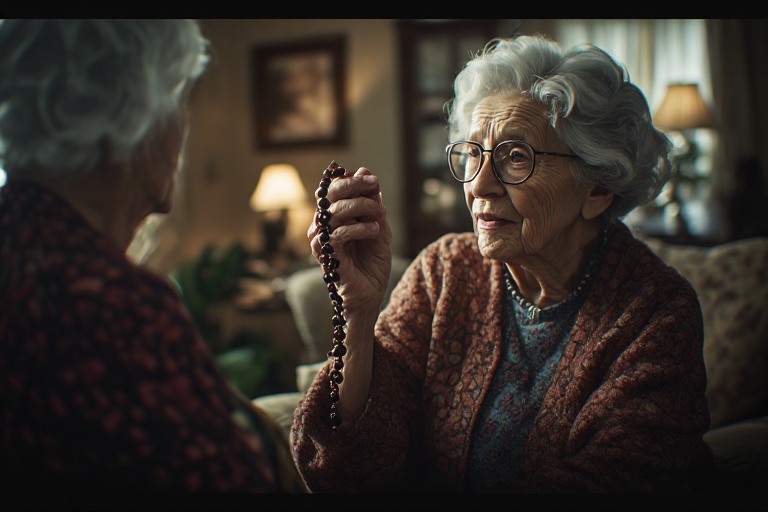
Prayer, rosary and a shared field of sound.

Patient story · Faith & frequency

Prayer, rosary and a shared field of sound.

Eleanor, 87, and her sister Ruth have prayed together for sixty years. Now they do it with a low Schumann-resonance drone at 7.83 Hz filling the living room from a bookshelf speaker. "It feels like the room is praying with us," Eleanor says.

The sisters log their intentions together in a shared notebook, and mark the moments when, as Ruth puts it, "the air gets lighter." Neighbors and grandchildren have started joining on Sundays. What began as a private ritual has become a small gathering — a reminder that healing is often something we do together.

Walter sleeps through the night again.

Patient story · Sleep

Walter sleeps through the night again.

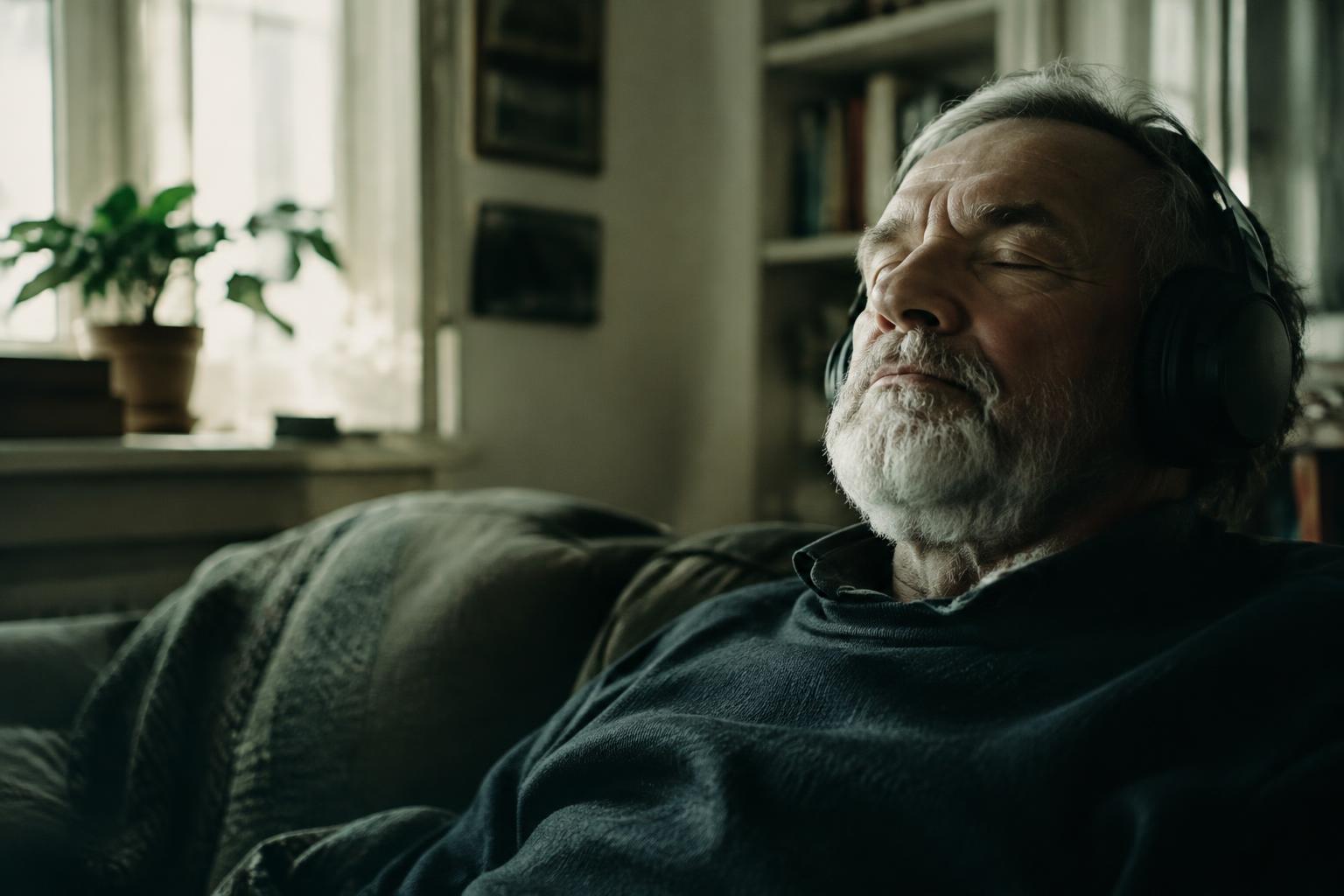
After decades of interrupted sleep, Walter began a nightly session through over-ear headphones built entirely on specified frequencies: a 174 Hz foundation tone, with a 2 Hz delta-range binaural beat (200 Hz in one ear, 202 Hz in the other) guiding him toward deep sleep.

Within a month, he was falling asleep before the track ended. In week six, his session moved to a gentler 1.5 Hz delta beat over the same 174 Hz base, and his journal began recording full nights for the first time in years. "I don't think about it anymore," he says. "I just put them on and let go."

Hands together, frequencies around her.

Patient story · Grief

Hands together, frequencies around her.

Grief arrived for Ruth all at once. Guided meditations paired with 396 Hz — a tone associated with releasing fear and guilt — gave her a place to put the weight. Sitting across from her sister, palms pressed, she lets the tone carry what words cannot.

She doesn't call it a cure. She calls it company. On the hardest days she listens twice, once in the morning and once before bed, and writes a letter to the person she lost. Sound became the companion that never needed her to explain, and the letters, she says, are slowly becoming lighter.

Lena's late-night study ritual.

Patient story · Focus

Lena's late-night study ritual.

Between graduate coursework and a night job, Lena's mind raced. She now studies with a single earbud in, running a steady alpha-range focus track while the other ear stays open to the quiet of her room.

That one earbud has become her signal to begin. Her wellness journal shows longer focus blocks, fewer late-night spirals and calmer transitions into sleep once the track fades out. "It's not about blocking the world," she says. "It's about choosing what I let in." Her own data, her own therapy.

Dressed for the life she's returning to.

Patient story · Self-image

Dressed for the life she's returning to.

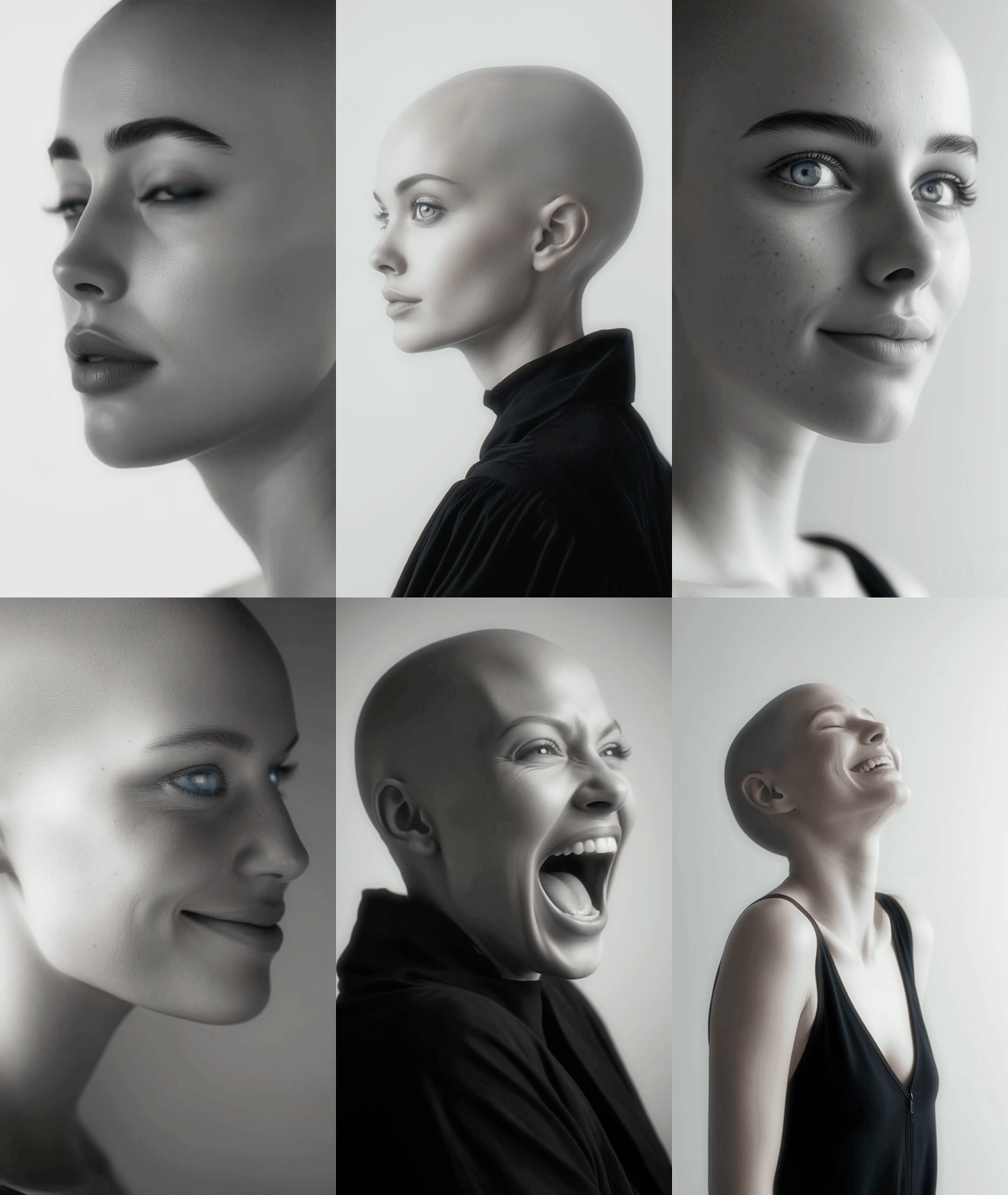
Amara chose the white dress for her first day without a headscarf. In the pink room where she recovered, a bedside speaker played the 639 Hz compositions she credits with "reconnecting me to people."

She sits for portraits now, something she once avoided entirely. Each session, she says, asked her to stay present with herself a little longer than felt comfortable — and slowly, comfort followed. The tones taught her to sit with herself first, and then to let others see her too.

The science of sound

Why frequency, why now.

Entrainment: the body follows the beat

Brainwave entrainment describes the tendency of neural oscillations to synchronize with rhythmic external stimuli. When two slightly different tones are delivered separately to each ear, the brain perceives a third 'binaural beat' at the difference frequency. Research groups have explored how beats in the delta (0.5–4 Hz), theta (4–8 Hz) and alpha (8–12 Hz) ranges correlate with states of sleep, meditation and relaxed focus. Sound Medicine uses these ranges as compositional anchors, inviting the listener's own nervous system to settle into rhythm.

The vagus nerve and the power of the hum

Humming, chanting and slow exhalation stimulate the vagus nerve — the long cranial nerve that helps regulate heart rate, digestion and the 'rest and digest' response. Studies of humming and chanting practices have reported shifts in heart-rate variability and reductions in perceived stress. This is why so many of our applications ask you to hum, breathe or speak: your own voice becomes the instrument of your recovery.

Solfeggio, Schumann and historical tones

Solfeggio frequencies such as 396, 417, 528, 639, 741 and 852 Hz come from a modern reinterpretation of medieval chant scales, and are widely used in contemporary meditation. The Schumann resonance — roughly 7.83 Hz — describes electromagnetic resonances of the Earth's atmosphere. Rife frequency sets descend from early twentieth-century experimentation. We present these as historically-informed creative frameworks for listening, reflection and ritual.

Sound as environment, not just content

Natural soundscapes — ocean, river, wind, mountain air — consistently rank among the most restorative sounds in listener studies. They mask disruptive noise, lower the sense of threat in the environment and give the mind a gentle, non-demanding object of attention. A healing environment is one you can return to every night; the soundscape becomes a doorway you walk through on purpose.

Total healing through achieved wellness

Total healing, in this study, is not a single cure but a practiced state: sleep that restores, breath that steadies, attention that can rest, relationships that hold, and faith or meaning that sustains. Sound is the thread that ties these together. Each session is a small daily act of self-authorship — and the patient, not the product, is the active ingredient.

"The tone is only the prescription. Your listening is the medicine."

Thomas Rosario Wysocki